• Where to Plant
    • Sun
    • Soil
    • Water
    • In-Ground Gardens
    • Raised Beds
    • Container Gardening
    • Vertical Gardening
    • Indoor Gardening
    • Crop Rotation
  • When to Plant
    • Gardening Zones
    • Monthly Planting Guides
      • Garden Zones 3 & 4
      • Garden Zones 5 & 6
      • Garden Zones 7 & 8
      • Garden Zones 9 & 10
    • Year-Round Gardening
      • Spring Gardening
      • Fall Gardening
      • Winter Gardening
        • Hoop Houses
        • Cold Frames
        • Row Covers
        • Frost Tolerant Plants
  • What to plant
    • Vegetables
      • Beets
      • Broccoli
      • Carrots
      • Corn
      • Cucumbers
      • Green Beans
      • Garlic
      • Kale
      • Lettuce
      • Onions
      • Peppers
      • Peas
      • Popcorn
      • Potatoes
      • Spinach
      • Sprouts
      • Squash
      • Tomatoes
    • Fruit
      • Blackberries
      • Melons
      • Peaches
      • Raspberries
      • Strawberries
    • Herbs
      • Chives
    • Shade Tolerant plants
    • Easy to Grow
    • Frost Tolerant Plants
  • Gardening Tips
    • About Us
    • Pest/Diseases
    • Weeds
    • Composting
    • Tools/Equipment
    • Pruning/Thinning
    • Indoor Seed Starting
    • Recipes
    • Preserving your Harvest
    • Video Courses
      • Growing Tomato Heaven!! Our latest Video Course
      • Year Round Gardening Video Course
      • Vegetable Gardening Basics
      • Build your own PVC Drip Irrigation System – Video Course
    • DIY Projects
  • The Gardening Academy
  • Search
  • Menu
  • Skip to right header navigation
  • Skip to main content
  • Skip to primary sidebar
  • Skip to footer

Before Header

  • Facebook
  • Instagram
  • Pinterest
  • Twitter
  • YouTube

Our Stoney Acres

Organic Vegetable Gardening

  • Where to Plant
    • Sun
    • Soil
    • Water
    • In-Ground Gardens
    • Raised Beds
    • Container Gardening
    • Vertical Gardening
    • Indoor Gardening
    • Crop Rotation
  • When to Plant
    • Gardening Zones
    • Monthly Planting Guides
      • Garden Zones 3 & 4
      • Garden Zones 5 & 6
      • Garden Zones 7 & 8
      • Garden Zones 9 & 10
    • Year-Round Gardening
      • Spring Gardening
      • Fall Gardening
      • Winter Gardening
        • Hoop Houses
        • Cold Frames
        • Row Covers
        • Frost Tolerant Plants
  • What to plant
    • Vegetables
      • Beets
      • Broccoli
      • Carrots
      • Corn
      • Cucumbers
      • Green Beans
      • Garlic
      • Kale
      • Lettuce
      • Onions
      • Peppers
      • Peas
      • Popcorn
      • Potatoes
      • Spinach
      • Sprouts
      • Squash
      • Tomatoes
    • Fruit
      • Blackberries
      • Melons
      • Peaches
      • Raspberries
      • Strawberries
    • Herbs
      • Chives
    • Shade Tolerant plants
    • Easy to Grow
    • Frost Tolerant Plants
  • Gardening Tips
    • About Us
    • Pest/Diseases
    • Weeds
    • Composting
    • Tools/Equipment
    • Pruning/Thinning
    • Indoor Seed Starting
    • Recipes
    • Preserving your Harvest
    • Video Courses
      • Growing Tomato Heaven!! Our latest Video Course
      • Year Round Gardening Video Course
      • Vegetable Gardening Basics
      • Build your own PVC Drip Irrigation System – Video Course
    • DIY Projects
  • The Gardening Academy
  • Search
Home » Using Tomato Cages in Your Garden

Using Tomato Cages in Your Garden

June 17, 2019 //  by Rick//  1 Comment

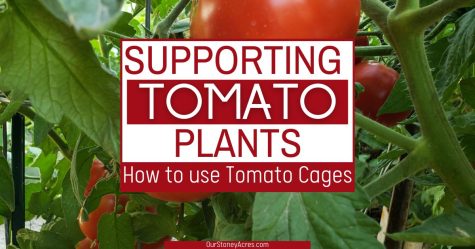
Using Tomato Cages is the lazy man’s way of supporting your growing tomatoes. But it is important to do something to support those tomatoes and cages are a cheap and easy way to do it.
Using Tomato Cages

This post contains affiliate links, clicking on them with not cost you anything extra, but does allow Stoney Acres to make a small commission on your purchase through the Amazon Affiliate Program!

Using tomato cages is one of three different methods of supporting your growing tomatoes. The other two methods are staking and trellising.

Why you should be using tomato cages

I choose to use tomato cages for one main reason, they are easy, and I’m lazy!!

Using tomato cages really doesn’t require much other than the initial investment and remembering to set them out each year. That makes them the best choice in my busy life!
Using Tomato Cages 5

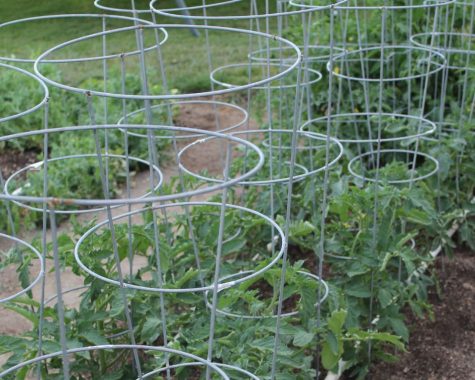
Using some type of support with tomatoes is important. Tomato plants can get quite large and the fruit is very heavy. Without support, the vines will collapse to the ground where all kinds of problems can occur.

Many tomato diseases are soil borne.  If your tomatoes are growing on the ground there is a much bigger chance those diseases will transfer to the plant early in the season and ruin your crop. Also with your tomato plants sprawled on the ground, it is much easier for pests (both insects and critters) to get access to the ripening fruit. Tomato cages help both problems by supporting the plants and keeping the fruit off the ground!!

Buying Tomato Cages

When you are buying tomato cages be sure to spend a little extra money!! Those cheap $3 cages you see at most big box stores (and some time even the grocery stores) are terrible!!! They are too small and are made of light gauge wire. After only one season they will be helplessly bent.  They usually collapse under the weight of your tomato plants or blow over in the wind.

Instead, choose more expensive cages made from heavy gauge wire. (Follow this link for the type I buy)

Using Tomato Cages 2

You can see from this photo how strong and heavy the wire is on these cages. The one in this picture is 6 years old and still hasn’t lost its shape.

Also, be sure the cages you buy are at least 4 feet tall.  Also, they should have nice long legs that can go deep in the soil for support.

There are two different types of cages in my collection, both heavy gauge wire.

Using Tomato Cages square

Overall I really like the square ones, they fold up for storage and are very stable. I have 8 of them but they seldom get used on my tomatoes because they are so handy for other plants like peas and cucumbers!!

Using Tomato Cages Round

The round cages are very strong and go deep in the soil so that they are able to support the weight on my mature plants.  These are the cages I use most often in my garden and I currently have 16 of them.

How and when to put them out

I always install my tomato cages as soon as I plant my tomatoes. I’ve found that if I don’t get them out right away then I forget and they end up being a pain to put on the larger plants later.

To install simply position the legs of the cage around the tomato plant and press the legs deep into the soil. Try to get at least 10 inches of the leg into your soil. Then as your tomato plants grow.  Gently move the branches of the plant back inside the cage until the central leader of the plant comes out the top of the cage.

I have found tomatoes cages are better for determinate varieties of tomatoes. Indeterminate varieties grow too tall and are better suited for staking or fences.

Ease of use is the big factor when using tomato cages! Other than a little bit of guidance you have to give the plants at first, tomato cages are pretty much just stick them in the ground and forget them till fall!!! My busy life appreciates that easy approach!
First 30 Students

Would you like to learn more about growing tomatoes? My growing tomato heaven course is the perfect way to learn all you need to know to grow your best crop of tomatoes ever!! And for being a Stoney Acres reader you can get the 90-minute course for only $10!

Subscribe Button
Facebook Like Button
Using Tomato Cages - FB

Category: Tomatoes, Tools/EquipmentTag: Tomatoes

About Rick

Hi I'm Rick. And I am a gardening fanatic! I love growing organic fruits and vegetables in my backyard garden. And I love teaching others how to grow their own organic food!

Related Posts

You may be interested in these posts from the same category.
Learn how to Prune Tomatoes

Pruning Tomatoes for plant health and production

Seed Starting Pots

Seed Starting Pots

How to ripen Green Tomatoes

How to Ripen Green Tomatoes

Sun Sugar Tomatoes

Sun Sugar Tomatoes

Seedling Heat Mat

Should You Use A Seedling Heat Mat?

Hoop House DIY

Simple Hoop House Construction on a Raised Bed Garden

Cold Frames for Garden

Building a garden cold frame – Step by step instructions

Protect tomatoes from frost

Protecting Your Tomatoes from Early Frost

How To Get Rid of Mice in your garden

The Magical Mouse Box

Cold Frames for Garden

Cold Frame Construction – Winter Gardening Series #6

15 Dollar DIY Cucumber Trellis

Simple Cucumber Trellis for only $15

Building a Grape Arbor

Building a Grape Arbor in Your Backyard Garden

Previous Post: «Male versus Female blossoms The Difference between Male and Female Blossoms
Next Post: Cross Pollination Myths in the Vegetable Garden Cross Pollination Myths»

Reader Interactions

Comments

  1. Thisni Caza

    January 15, 2023 at 12:25 pm

    I’ve read several of your articles. All were well-written and very helpful. I’m planning to start seeds this year, for the first time, so especially appreciated the articles on seed-starting mixes and pots. One request: could you update the link to the round cages? That product is no longer available. Also, one question for clarification: you recommend cages that are at least 4′ high. Is that measurement before or after they are installed? Then, the round cages you recommend are not that tall: 37″ overall; 32″ installed. Is that because you don’t use them for tomatoes, but for other veggies? Again, thank you for such excellent and thorough information.

    Reply

Leave a Reply Cancel reply

Your email address will not be published. Required fields are marked *

Primary Sidebar

Footer

Welcome to Our Stoney Acres

We are not doctors and the statements on this blog have not been evaluated by the FDA. Any products mentioned or advice given are for educational purposes only and are not intended to diagnose, treat, cure, or prevent any disease.
Any canning or food preservation advice given on this blog has not been evaluated by the FDA or USDA, you are encouraged to verify our food preservation advice on the USDA food preservation website.

Our Stoney Acres is a participant in the Amazon Services LLC Associates Program, an affiliate advertising program designed to provide a means for sites to earn advertising fees by advertising and linking to Amazon.com. In addition, links on this page might be affiliate links, which means we earn a small commission at no extra cost to you.

Recent Posts

How to grow RadishesGrowing Radishes
summer Crisp lettuceGrowing Guide – Summer Crisp Lettuces
Planting & Growing KaleHow to Grow Kale: Step-By-Step Guide
How to Grow BroccoliGrowing Broccoli
Pest control for gardenOrganic Garden Pest Control
Growing WatermelonHow to Grow Watermelon

Site Footer

  • Facebook
  • Pinterest
  • Twitter
  • YouTube
  • Where to Plant
  • When to Plant
  • What to plant
  • Gardening Tips
  • The Gardening Academy
  • Search
  • About Us
  • Contact Us
  • Stoney Acres Privacy Policy
  • Online Gardening School Affiliate Program

Copyright © 2026 Our Stoney Acres · All Rights Reserved · Powered by Mai Theme